01.13.09
Posted in Ethics, Social and Political Philosophy at 11:38 pm by Kam Weng
Israel-Hamas War: Moral Rules and Judgment Judging from the public furor in response to present conflict in Gaza it is evident that people are concerned that innocent people should not suffer violence in times of international conflict. The Malaysian government has sided with Hamas and forcefully condemned Israel Link: Malaysiakini 12 Jan 2009. The public [...]
Read more...
Permalink
12.31.07
Posted in Culture/Society, Social and Political Philosophy at 1:14 pm by Kam Weng
The Deputy Minister of Internal Security, Johari Baharum, recently declared that only Muslims may use the word ‘Allah’ to describe the God they worship…. This article offers a firm, rational and clear rebuttal to the flawed rationale that underlies the Deputy Minister’s declaration.
The declaration is questionable for the following reasons: 1) its logic is flawed 2) it omits historical facts 3) it shows disrespect for cultural identity and 4) it disregards Constitutional rights of Malaysian citizens.
Read more...
Permalink
10.10.07
Posted in Public Theology, Social and Political Philosophy at 1:38 pm by Kam Weng
Christian social engagement aims at building a covenant nation based on justice and religious liberty for all. It may include the following agenda:
1) Educating Christians on the rights and responsibility of citizenship.
2) Promoting civil society through NGOs and voluntary societies.
3) Supporting particular political candidates.
4) Sustaining the prophetic witness of the Church against the arrogance of power by embodying submission to the kingdom of God.
5) Affirming the moral right to civil disobedience as loyal citizens.
Read more...
Permalink
09.11.07
Posted in Critical Thinking, Public Theology, Social and Political Philosophy at 11:51 am by Kam Weng
We must address the challenge of the cultured despisers of Christianity if Christian witness is to gain credibility:
- Secure a thorough understanding of the modern world.
– Identify crucial issues that must be addressed if we are to follow J. H. Bavinck mission strategy to annex culture, to take every thought captive in Christ.
- Re-conceptualize the framework for Christian reflection and set priorities for theological education. All too often activism replaces serious theological reflection when we act under the tyranny of the urgent. But in the absence of a distinct intellectual framework and with our inability to ferret out and critique the presuppositions of dominant thought patterns of the world, we end up merely responding to the agenda set by non-Christian elites and eventually conform to the spirit of the age.
- Ensure that theology is both grounded in Biblical tradition and critically correlated with contextual realities. This demands a fresh look at theological education and how we train Christian thinkers and pastors.
Read more...
Permalink
06.25.07
Posted in Ethics, Social and Political Philosophy at 11:14 pm by Kam Weng
Asian critics offer more sophisticated arguments than expediency in their resistance against demands for greater implementation of human rights policies. Of the various arguments voiced by Asian governments I shall focus on four: 1) that human rights are culture specific; 2) that community takes precedence over individuals; 3) that social-economic rights have priority over civil political rights, and 4) that the implementation of human rights should be respected as a matter of national sovereignty.
Read more...
Permalink
04.15.07
Posted in Public Theology, Social and Political Philosophy at 11:46 pm by Kam Weng
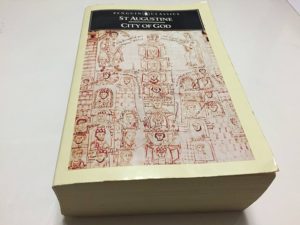
Hospitality most fittingly captures the ways and welfare of the pilgrim peoples. In the act of sharing we achieve freedom from the strangling and suffocating attachment to worldly goods. When we share and receive from one another, we are reminded that we are merely stewards of God’s gifts to be used for the common good. In offering hospitality to strangers we affirm we are merely fellow pilgrims en route to the heavenly city of God.
Read more...
Permalink
04.17.06
Posted in Ethics, Social and Political Philosophy at 12:33 am by Kam Weng
It is common place to declare that all religions teach us to be good. As such, protagonists relying on an ethical justification of religion often point to a set of moral values which all religions presumably affirm. . . .Nevertheless, how we are taught such goodness is often not clearly explained. It is not clear how displaying of a set of common moral values would suffice to validate the ethical significance of religion.
The secularity of modern pluralistic societies also means that moral values are not the preserve of religions. The current dominance of rationalistic ethics in moral education is a case in point.
Read more...
Permalink
04.13.06
Posted in Public Theology, Social and Political Philosophy at 10:59 am by Kam Weng
“The Asian way: Regional Thinkers Put Homegrown Ideas before the World.� This was the provocative title for a leading article published in the March 2 1994 issue of Asiaweek. The article described how Asian thinkers are asserting that global issues should not be discussed on terms set by the West alone. The time has come for respectable Asian intellectuals to make contributions from Asian traditions which defend “strong family values, respect for authority, consensus in decision-making, and supremacy of the community over the individual.� Additional note was taken of policies that worked in Asia such as “a social contract between people and state which guarantees basic needs and law and order in exchange for respect for authority and self-reliance without welfarism, a morally clean environment, a free but responsible press,� and the rejection of “the extreme form of individualism practiced in the West.�
Read more...
Permalink
Posted in Reviews, Social and Political Philosophy at 10:49 am by Kam Weng
‘Civil Society’ has become fashionable in local political discourse. This slogan was overlooked despite the prominence it gained as a platform to rally human rights activists in their struggle against communist rulers in Eastern Europe. Only when the Deputy Prime Minister Datuk Anwar Ibrahim linked Civil Society (Masyrakat Madani) to democracy did the term generate curiosity and excitement. A relatively unknown term was suddenly transformed into a buzzword among the local intelligentsia.
Read more...
Permalink
04.12.06
Posted in Social and Political Philosophy at 10:51 pm by Kam Weng
The modern state no longer needs to imprison or shoot intellectuals. It has become pragmatic and welcomes intellectuals albeit on terms set by the state itself. As one senior government commented, current leaders are only interested in the question of whether a policy works. “Don’t complicate it with the question of truth.� This seems an easy requirement for intellectuals to accept and comply with in exchange for state patronage and job security. But the outcome is the disappearance of intellectuals in the traditional sense, i.e. as those who speak out of a non-partisan commitment to the wider truth even if it means confronting the state. Hence the prophetic fulfillment of Julian Benda’s classic essay on the “betrayal of the intellectuals�.
Read more...
Permalink
« Previous entries Next Page » Next Page »